
In Excel's Power Query tool, you get the option to directly import data from a website using a URL address. However, if the website requires a login with a username or password, you must go through the authentication process using the correct credentials.
For a website that uses basic authentication, you can enter the credentials directly from Excel. If the website uses a more complex login system, a VBA macro may help you with the login.
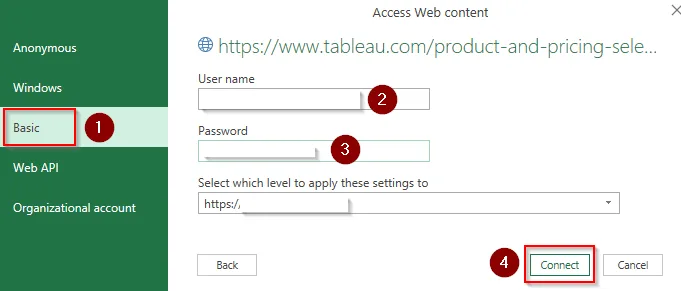
➤ From the Access Web Content box, choose Basic for a general website login or Windows to log in with a Microsoft account. Enter your Username/Email and Password. Click Connect.
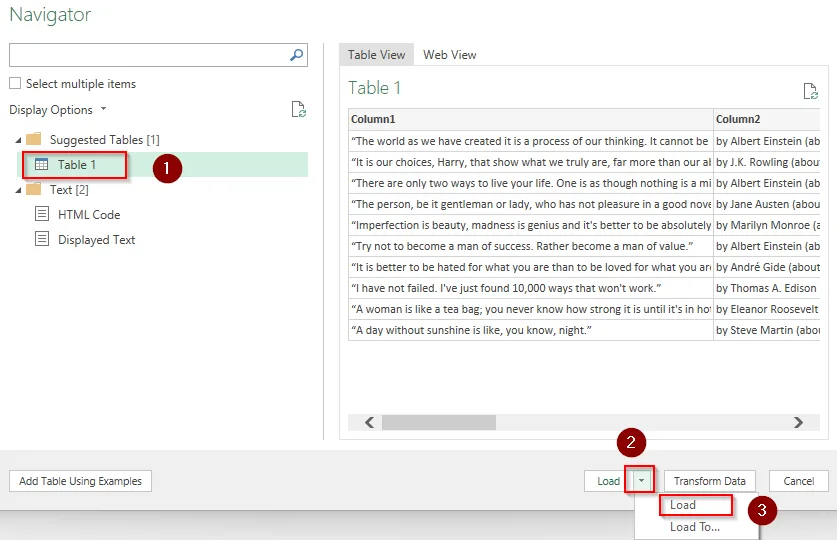
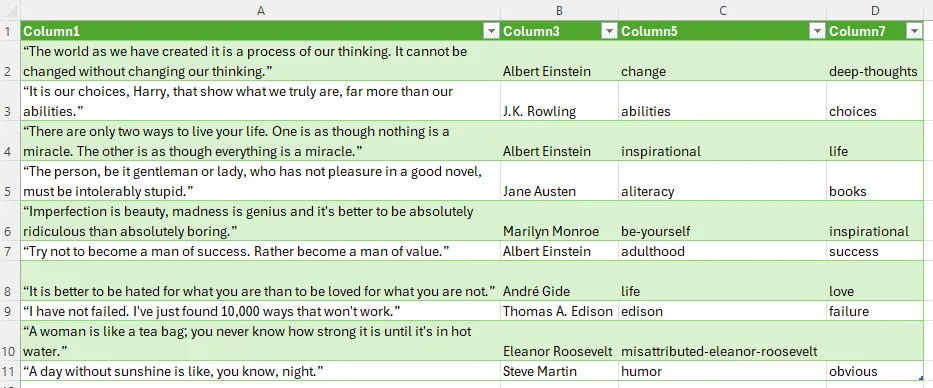
➤ Now, your data from the web will be loaded in the Power Query Editor. Select Table 1, Table 2, or other options to find the right table with the correct data. Transform the data if you want, and click on the Load drop-down to select a location to input the scraped data.
This article covers how to extract data from a website that requires a login using Power Query and VBA coding.
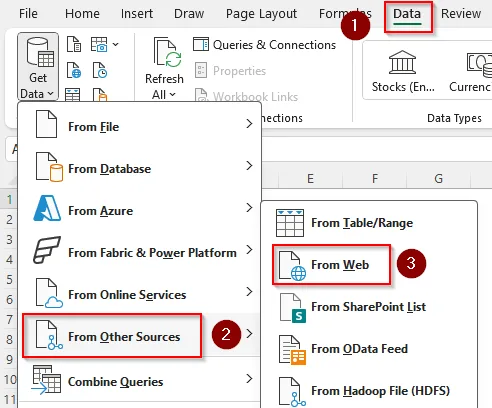
Extract Data from Website Using Power Query
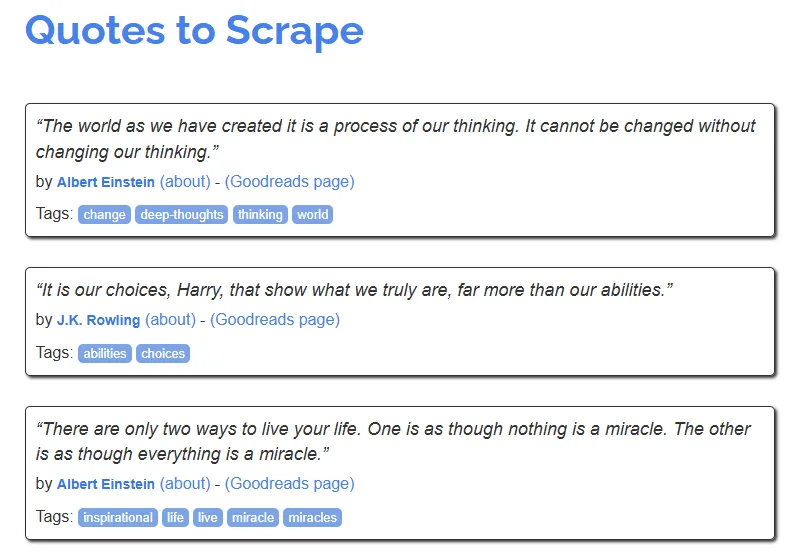
To explain the methods, we'll use the Quotes to Scrape website to extract the following data:
Excel's Power Query tool can handle logins for many standard web pages. It works for sites that return HTML or JSON after a simple POST form and don’t require JavaScript-heavy authorization. Here's how to use it:
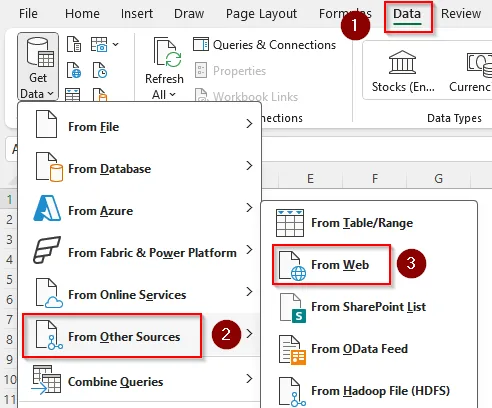
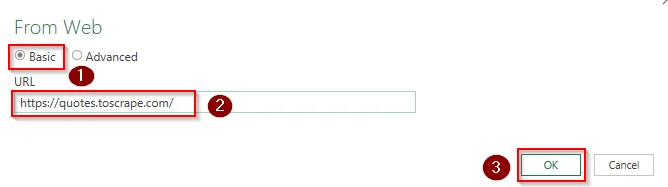
Customized VBA Macro for Complex Website Logins
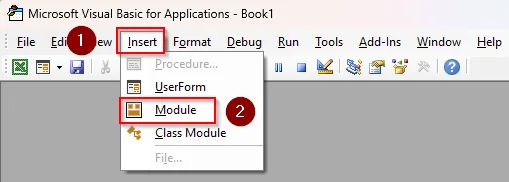
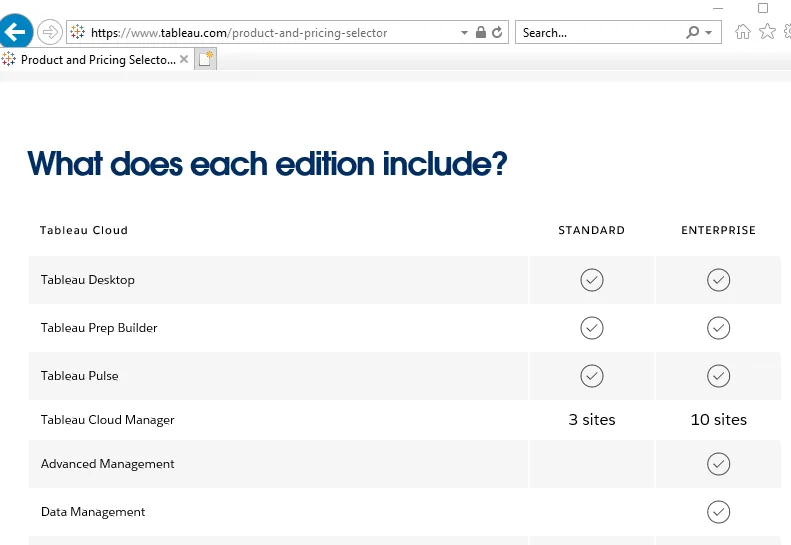
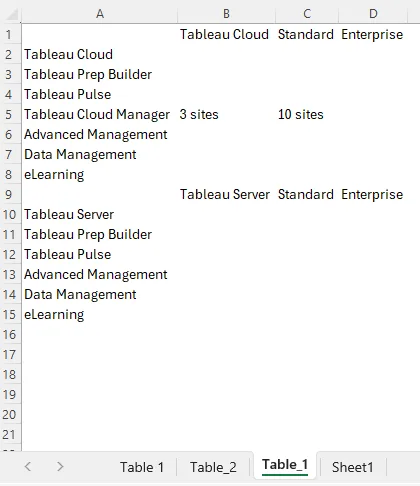
Some websites have more advanced security, and Excel can't handle the login natively. So, we'll use a VBA macro to log into a website within Excel and extract data (tables, lists, paragraphs, etc.). For this example, we’ll extract data from Product and Pricing Selector | Tableau from Salesforce. Below are the steps:
Option Explicit
' ================================
' MAIN ENTRY POINT
' ================================
Sub ScrapeSiteSmart()
    On Error GoTo ErrHandler
    Dim loginUrl As String, targetUrl As String
    Dim userName As String, passWord As String
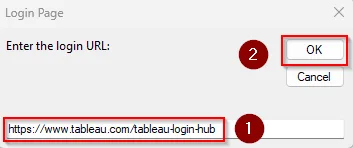
    loginUrl = InputBox("Enter the login URL:", "Login Page")
    If loginUrl = "" Then Exit Sub
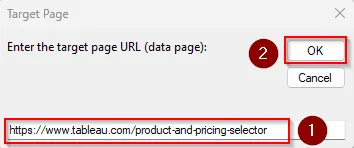
    targetUrl = InputBox("Enter the target page URL (data page):", "Target Page")
    If targetUrl = "" Then Exit Sub
    userName = InputBox("Enter your username or email:", "Login Info")
    passWord = InputBox("Enter your password:", "Login Info")
    If userName = "" Or passWord = "" Then
        MsgBox "Username or password missing. Exiting.", vbExclamation
        Exit Sub
    End If
    LoginAndSmartExtract loginUrl, targetUrl, userName, passWord, 30
    Exit Sub
ErrHandler:
    MsgBox "Error: " & Err.Description, vbCritical, "ScrapeSiteSmart"
End Sub
' ================================
' MAIN PROCESS: LOGIN + EXTRACT
' ================================
Private Sub LoginAndSmartExtract(loginUrl As String, targetUrl As String, _
                                 userName As String, passWord As String, _
                                 Optional timeoutSeconds As Long = 30)
    On Error GoTo ErrHandler
    Dim ie As Object, doc As Object
    Dim f As Object, inputEl As Object
    Dim foundUser As Boolean, foundPass As Boolean, foundSubmit As Boolean
    Dim tbls As Object, ws As Worksheet, el As Object
    Dim textChunks As String
    ' Create IE object
    Set ie = CreateObject("InternetExplorer.Application")
    ie.Visible = True
    ie.navigate loginUrl
    If Not WaitForReady(ie, timeoutSeconds) Then
        MsgBox "Login page did not load properly.", vbCritical
        GoTo Cleanup
    End If
    Set doc = ie.document
    ' Try to detect and fill login form
    For Each f In doc.forms
        If Not foundUser Then foundUser = FieldExistsThenSet(f, Array("username", "user", "email", "login"), userName)
        If Not foundPass Then foundPass = FieldExistsThenSet(f, Array("password", "passwd", "pass"), passWord)
        ' Look for submit button
        If Not foundSubmit Then
            On Error Resume Next
            Set inputEl = f.querySelector("input[type='submit'], button[type='submit']")
            If Not inputEl Is Nothing Then foundSubmit = True
            On Error GoTo 0
        End If
        If foundUser And foundPass Then Exit For
    Next f
    If foundSubmit Then inputEl.Click
    WaitForReady ie, timeoutSeconds
    ' Navigate to target URL
    ie.navigate targetUrl
    If Not WaitForReady(ie, timeoutSeconds) Then
        MsgBox "Target page failed to load.", vbCritical
        GoTo Cleanup
    End If
    Set doc = ie.document
    ' --- Extract all TABLES ---
    Set tbls = doc.getElementsByTagName("table")
    If tbls.Length > 0 Then
        Dim i As Long
        For i = 0 To tbls.Length - 1
            Set ws = AddResultSheet("Table_" & (i + 1))
            DumpTableToSheet tbls.Item(i), ws
        Next i
    End If
    ' --- Extract readable TEXTS if no tables found ---
    If tbls.Length = 0 Then
        textChunks = SmartExtract(doc)
        Set ws = AddResultSheet("Extracted_Text")
        ws.Range("A1").Value = "Extracted Web Data"
        ws.Range("A2").Value = textChunks
        ws.cells.WrapText = True
        ws.Columns("A:A").AutoFit
    End If
    MsgBox "Extraction completed!", vbInformation
Cleanup:
    On Error Resume Next
    ie.Quit
    Set ie = Nothing
    Exit Sub
ErrHandler:
    MsgBox "Error during extraction: " & Err.Description, vbCritical
    Resume Cleanup
End Sub
' ================================
' SUPPORTING FUNCTIONS
' ================================
Private Function FieldExistsThenSet(formObj As Object, fieldNames As Variant, fieldValue As String) As Boolean
    Dim nm As Variant, el As Object
    On Error Resume Next
    For Each nm In fieldNames
        Set el = formObj.querySelector("input[name='" & nm & "'], input[id='" & nm & "']")
        If Not el Is Nothing Then
            el.Value = fieldValue
            FieldExistsThenSet = True
            Exit Function
        End If
    Next nm
End Function
Private Function WaitForReady(ie As Object, Optional timeoutSeconds As Long = 15) As Boolean
    Dim t0 As Double: t0 = Timer
    Do
        DoEvents
        If Timer - t0 > timeoutSeconds Then Exit Do
        If Not ie.Busy And ie.readyState = 4 Then
            WaitForReady = True
            Exit Function
        End If
    Loop
    WaitForReady = False
End Function
Private Function NzString(v As Variant) As String
    On Error Resume Next
    If IsNull(v) Or IsEmpty(v) Then
        NzString = ""
    Else
        NzString = Trim(CStr(v))
    End If
End Function
Private Function SmartExtract(doc As Object) As String
    Dim paras As Object, divs As Object, spans As Object, txt As String
    Dim el As Object
    On Error Resume Next
    Set paras = doc.getElementsByTagName("p")
    Set divs = doc.getElementsByTagName("div")
    Set spans = doc.getElementsByTagName("span")
    For Each el In paras
        If Len(Trim(el.innerText)) > 0 Then txt = txt & el.innerText & vbCrLf
    Next el
    For Each el In divs
        If Len(Trim(el.innerText)) > 0 Then txt = txt & el.innerText & vbCrLf
    Next el
    For Each el In spans
        If Len(Trim(el.innerText)) > 0 Then txt = txt & el.innerText & vbCrLf
    Next el
    SmartExtract = txt
End Function
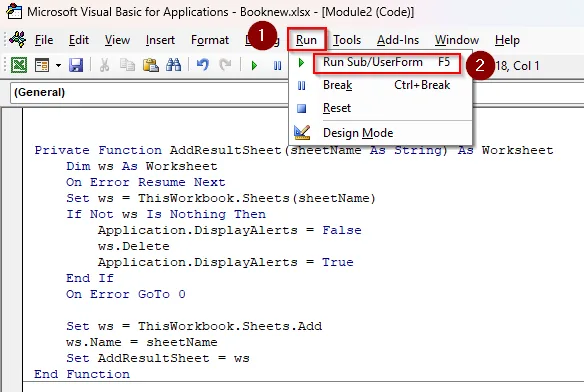
Private Function AddResultSheet(sheetName As String) As Worksheet
    Dim ws As Worksheet
    On Error Resume Next
    Set ws = ThisWorkbook.Sheets(sheetName)
    If Not ws Is Nothing Then
        Application.DisplayAlerts = False
        ws.Delete
        Application.DisplayAlerts = True
    End If
    On Error GoTo 0
    Set ws = ThisWorkbook.Sheets.Add
    ws.Name = sheetName
    Set AddResultSheet = ws
End Function
Private Sub DumpTableToSheet(tbl As Object, ws As Worksheet)
    Dim rows As Object, r As Long, cells As Object, c As Long
    Set rows = tbl.getElementsByTagName("tr")
    For r = 0 To rows.Length - 1
        Set cells = rows.Item(r).getElementsByTagName("th")
        If cells.Length = 0 Then Set cells = rows.Item(r).getElementsByTagName("td")
        For c = 0 To cells.Length - 1
            ws.cells(r + 1, c + 1).Value = NzString(cells.Item(c).innerText)
        Next c
    Next r
    ws.Columns.AutoFit
End Sub
Downloadable Resources
Get our practice workbook or necessary files that we have worked with to prepare this article.
Extract Data from a Website with a Login.xlsx
Practice Workbook · Excel (.xlsx)
Frequently Asked Questions
How to automatically refresh extracted web data in Excel?
You can make Excel automatically refresh data pulled from a website at set intervals or when the workbook opens. Go to the Data tab >> Queries & Connections >> right-click your query >> Properties. Under the Usage tab, check Refresh Every and set the time (e.g., every 10 minutes). Or, check Refresh Data When Opening the File.
Can I import data as a CSV file with login from Excel?
To import data as a CSV file from a website that requires a login, first, log in manually on the site and download the CSV. In Excel, go to the Data tab >> Get Data drop-down >> From Text/CSV and load it directly. If the site provides an API endpoint for CSV data, go to the Data tab >> Get Data drop-down >> From Other Sources >> From Web. For authentication, use the Basic or Web API option in the login prompt and enter the API or CSV link (e.g., https://example.com/data/export.csv?token=yourkey).
How to combine data from multiple secured websites into one Excel sheet?
Go to the Data tab >> Get Data drop-down >> From Other Sources >> From Web. To connect to the first website, enter the site or API URL in the From Web dialog box and load the extracted data. Repeat the steps for other websites and create a new query for each site using its own login credentials. Finally, combine the data in Power Query by clicking the Home tab >> Append Queries (to stack them vertically) or Merge Queries (to join side by side by matching columns). Click Close & Load to place the combined data into one sheet.
Concluding Words
As extracting data from a secure website can be unethical, many websites use high security measures to prevent Excel from accessing their data. Therefore, even the VBA macro might not always work. To gain access, you'll need a third-party scraping tool (usually paid) or Python coding to create a workaround by manually inspecting the coding elements of the site.