
Excel Pro Tips
How to Use Relative Cell Reference in Excel
Learn how to use relative cell references in Excel for basic calculations and easily copy formulas across rows and columns accurately.
Read article

11 articles tagged with “Excel Cell Reference”
Learn how to use relative cell references in Excel for basic calculations and easily copy formulas across rows and columns accurately.

Learn how to use absolute cell references in Excel to lock cells in formulas, perform accurate calculations, and copy formulas correctly.

Learn how to hard code in Excel by entering fixed values in formulas, using custom formatting, and converting formulas to values.
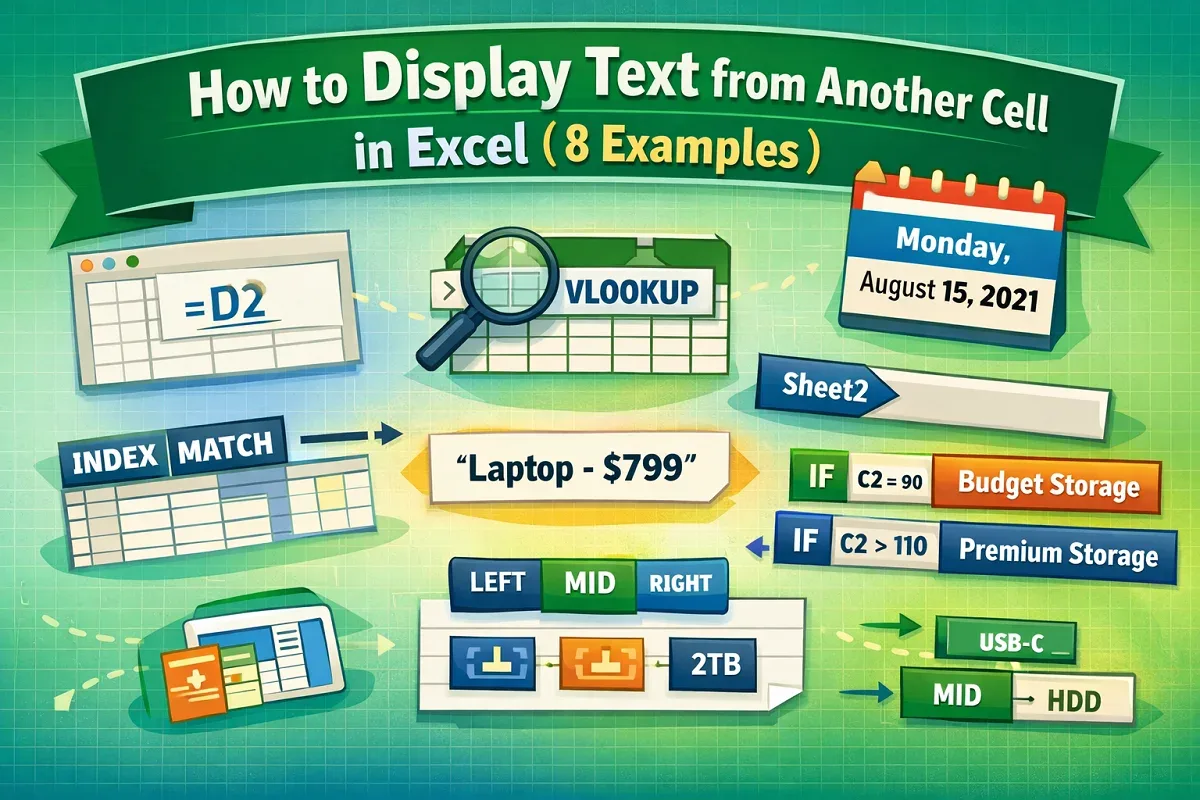
Display text from another cell in Excel using direct references, TEXT formatting, lookup formulas, named ranges, or conditional logic.
Learn 6 easy methods to use structured references in Excel formulas, including SUM, AVERAGE, IF, VLOOKUP, and more.
Learn how to reference a cell in another sheet based on a cell value in Excel using INDEX-MATCH, INDIRECT, and VBA methods.

Learn how to keep a cell fixed in Excel formulas using absolute references or the INDIRECT function for more control and accuracy.
Learn the key differences between absolute and relative references in Excel and how they affect copying or moving formulas in your sheets.

Learn how to reference a cell in another Excel sheet dynamically using INDIRECT, drop-downs, named ranges, VBA, CHOOSE, or INDEX functions.

Learn how to use mixed cell references in Excel with easy examples to lock rows or columns, boost accuracy, and simplify calculations.
Learn how to reference cells by row and column number in Excel using ROW, COLUMN, ADDRESS, INDIRECT, INDEX, and R1C1-style formulas.