How to Convert Number to Text with Leading Zeros in Excel
When working with ZIP codes, product IDs, employee codes, or any data where leading zeros are essential, Excel often strips those zeros because it treats entries as plain numbers. This

When working with ZIP codes, product IDs, employee codes, or any data where leading zeros are essential, Excel often strips those zeros because it treats entries as plain numbers. This

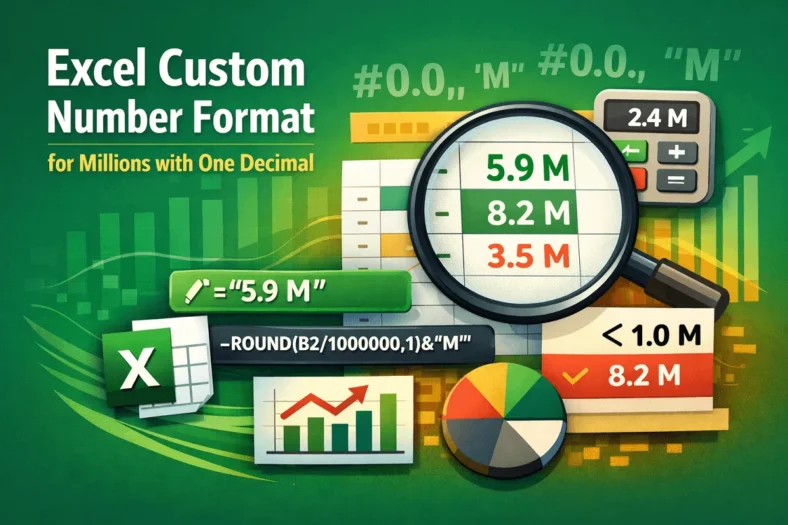
Dealing with large numbers like 125,000 or 12,500,000 in Excel can make your worksheets hard to read and interpret. Whether you’re preparing dashboards, reports, or presentations, displaying data as 125K

When working with large Excel workbooks or complex formulas, multi-threaded calculations can use all available CPU cores, sometimes maxing out 8 threads or more. While this speeds up recalculation, it

Knowing your Excel file’s extension is important for compatibility, sharing, and choosing the right features. For example, modern Excel uses .xlsx, while older versions use .xls. Other formats, such as

The Share Workbook feature in Excel allows multiple users to work on the same file simultaneously. However, if you’re using Excel 2019, Excel 2021, or Microsoft Office 365, you may

Sorting data in Excel is an effective way to organize and analyze information. While standard ascending or descending sorts work for most tasks, sometimes you need a specific order that

When entering data like phone numbers, ZIP codes, or product IDs in Excel, you might notice that leading zeros disappear automatically, for example, typing 00789 turns into 789. This happens

Dates are often easier to analyze when summarized by quarter and year, especially for financial reports, sales tracking, and performance dashboards. Instead of working with individual months, grouping data by

When working with spreadsheets, you’ll often encounter situations where you need Excel to perform calculations only if certain cells are not blank. For example, you may want to sum values,