
Working with CSV files in Excel can be tricky when UTF-8 encoding is required. If Excel doesn’t show the CSV UTF-8 (Comma delimited) option, opening or saving files may cause unusual text, missing symbols, or strange characters. This is a common issue with older Excel versions or when importing CSVs from other systems. Selecting the correct encoding ensures that all special characters, accents, and non-Latin symbols display properly.
In this article, we’ll explore multiple methods to handle UTF-8 encoding issues in Excel, including using built-in save options, Notepad as a workaround, and the Text Import Wizard. Let’s get started.
Steps to fix CSV UTF-8 not available in Excel:
➤ Click File >> Save As and select CSV (Comma delimited).
➤ In the Save As dialog, click Tools (bottom-right) >> Web Options.
➤ You can also access Web Options via File >> Options >> Advanced >> General.
➤ Go to the Encoding tab and select Unicode (UTF-8) or another preferred encoding.
➤ Click OK, then Save to store the file with the chosen encoding.

Save File with UTF-8 Using Excel Save As Dialog
In older Excel editions, the direct UTF-8 save option isn’t available. Using the Web Options dialog allows you to manually select the desired encoding, ensuring special characters are preserved when exporting or sharing CSV files. This method is essential for legacy systems or multilingual datasets.
Steps:
➤ Click File >> Save As and select CSV (Comma delimited).
➤ In the Save As dialog, click Tools (bottom-right) >> Web Options.

➤ You can also access Web Options via File >> Options >> Advanced >> General.
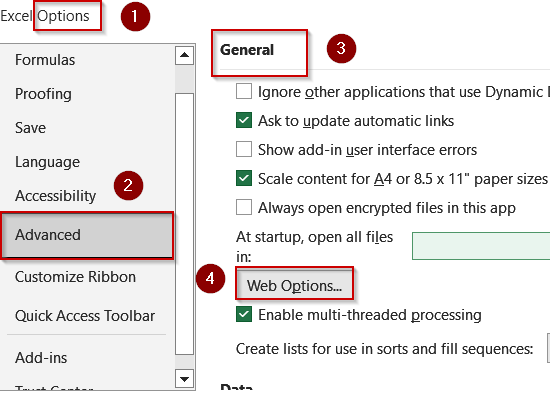
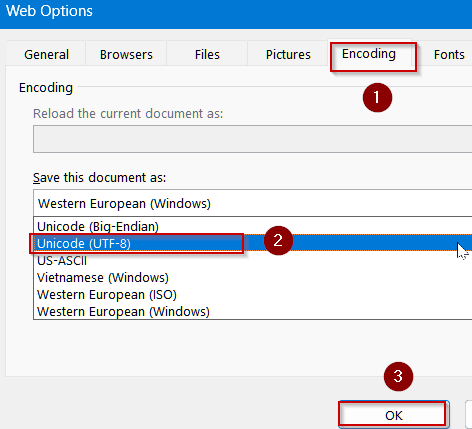
➤ Go to the Encoding tab and select Unicode (UTF-8) or another preferred encoding.
➤ Click OK, then Save to store the file with the chosen encoding.
Use Notepad to Apply UTF-8 Encoding
If Excel doesn’t provide a UTF-8 option, using Notepad as an intermediary is a simple workaround. This method ensures that your CSV contains the correct encoding before opening it in Excel.
Steps:
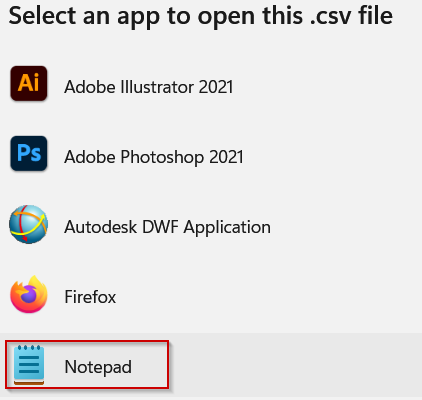
➤ Right-click the CSV file and select Open with >> Notepad.
➤ Click File >> Save As.
➤ In the Encoding dropdown at the bottom, select UTF-8.
➤ Save the file with a new name to avoid overwriting the original.
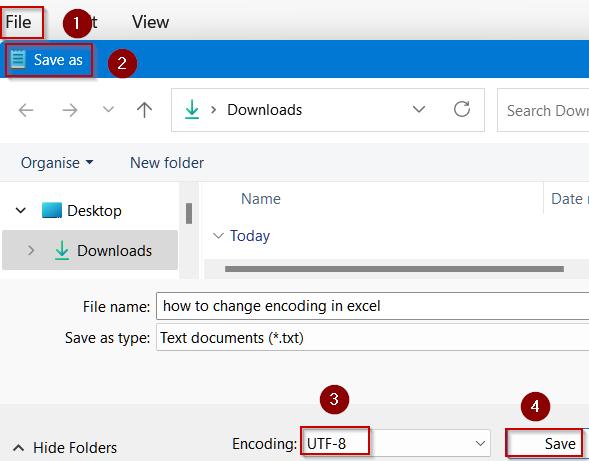
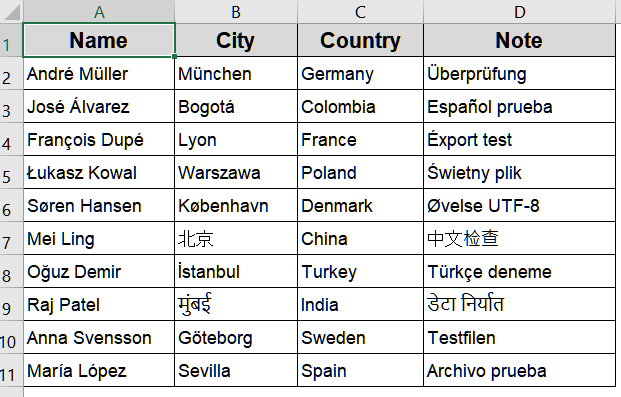
➤ Open the newly saved file in Excel to verify proper character display from File tab >> Open >> Select Text Files and hit Open.

Now all characters should load perfectly in Excel.
Fix Encoding via the Text Import Wizard
When opening CSV files, Excel sometimes automatically guesses the wrong encoding, causing special characters, accents, or symbols to appear scrambled. The Text Import Wizard lets you manually specify the correct encoding before loading, ensuring accurate display of all multilingual or special data.
Steps:
➤ Open Excel and click the Data tab >> Get Data/New Query >> From CSV.
➤ Open Excel and click the Data tab >> Get Data/New Query >> From CSV.
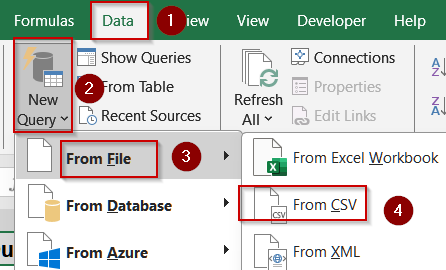
➤ Browse and select your CSV file, then click Import.

➤ In the wizard, locate the File Origin or Encoding dropdown.
➤ Choose 65001: Unicode (UTF-8) or the appropriate encoding.
➤ Complete the import by specifying delimiters and column formats as needed.

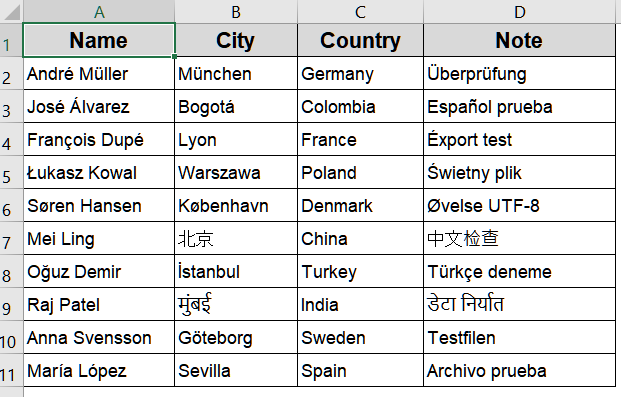
Your data should load all the characters correctly after this.
Downloadable Resources
Get our practice workbook or necessary files that we have worked with to prepare this article.
Make CSV UTF 8 Available in Excel.csv
Frequently Asked Questions
Why doesn’t Excel show CSV UTF-8 in Save As?
Many older Excel versions, particularly before 2016, do not include the CSV UTF-8 option. To preserve special characters and symbols when saving, you need alternative methods such as Notepad, Web Options, or the Text Import Wizard.
Can I open a UTF-8 CSV file directly in Excel?
Opening a UTF-8 CSV by double-clicking in older Excel versions often corrupts special characters. Using Data >> From Text/CSV and selecting UTF-8 encoding during import ensures all accented letters, symbols, and multilingual text display correctly.
What is the role of BOM in UTF-8 CSV files?
The Byte Order Mark (BOM) signals Excel that the CSV file is UTF-8 encoded. Files without a BOM may display garbled text. Importing through the Text Import Wizard or saving via Notepad can resolve this issue.
How can I verify a CSV file is UTF-8 encoded?
Open the CSV file in editors like Notepad++ or Visual Studio Code. Check the encoding displayed in the status bar or under the Encoding menu. It must read UTF-8 to ensure Excel interprets all characters correctly.
Does Notepad always fix CSV UTF-8 issues?
Notepad often resolves most CSV encoding problems by allowing you to re-save files in UTF-8. However, very large datasets or files containing rare special characters may still require Excel’s Text Import Wizard for proper display.
Wrapping Up
In this tutorial, we explored multiple solutions for the CSV UTF-8 not available issue in Excel. Using the Save As option, Notepad workaround, or the Text Import Wizard allows you to preserve all special characters, symbols, and multilingual text, ensuring smooth data handling and sharing. Feel free to download the practice file and share your feedback.