Non-numeric data represents text strings and Boolean values. If the input range contains non-numerical data, we cannot calculate descriptive statistics. This article will help you overcome the ...
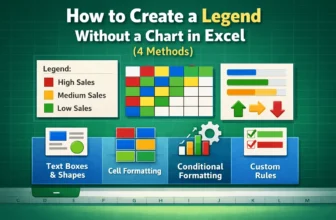
A legend is the part of a chart indicating different shapes, colors, fills, etc. of each data series.But a legend without a chart? The primary goal of a legend is to represent a data series.
...
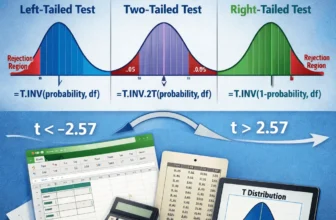
The T critical value is the threshold for determining whether a sample data point is statistically significant in the population. It defines the rejection area for the null hypothesis. We can find ...
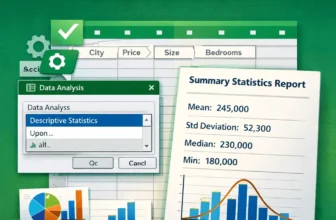
Summary statistics (aka descriptive statistics) gives a statistical description of the properties of a dataset. Excel offers built-in Data Analysis software to get the summary statistics quickly....
Tally is a popular software for business management. We often need to export tally data in Excel to perform data analysis and for better visualization, allowing us to make better decisions.To ...
A legend is a section of a chart that explains what different colors, lines, shapes, etc. mean. It is a visual guide for users to understand each series better.It is particularly helpful for ...
A legend is a section of the chart that represents the meaning of different colors, lines, shapes, etc. It works as a visual guide for understanding each series better. Editing a legend in excel ...
Charts are the visual representation of data. We use charts to quickly identify patterns and trends instead of going through an overwhelming amount of data. You can use the features from the ribbon, ...
In Excel, tallying a column means calculating the sum of that column. You can use Excel functions and features to tally a column, tally filtered cells, and set conditions for tallying.To ...