
Excel LOOKUP vs VLOOKUP: Key Differences Explained
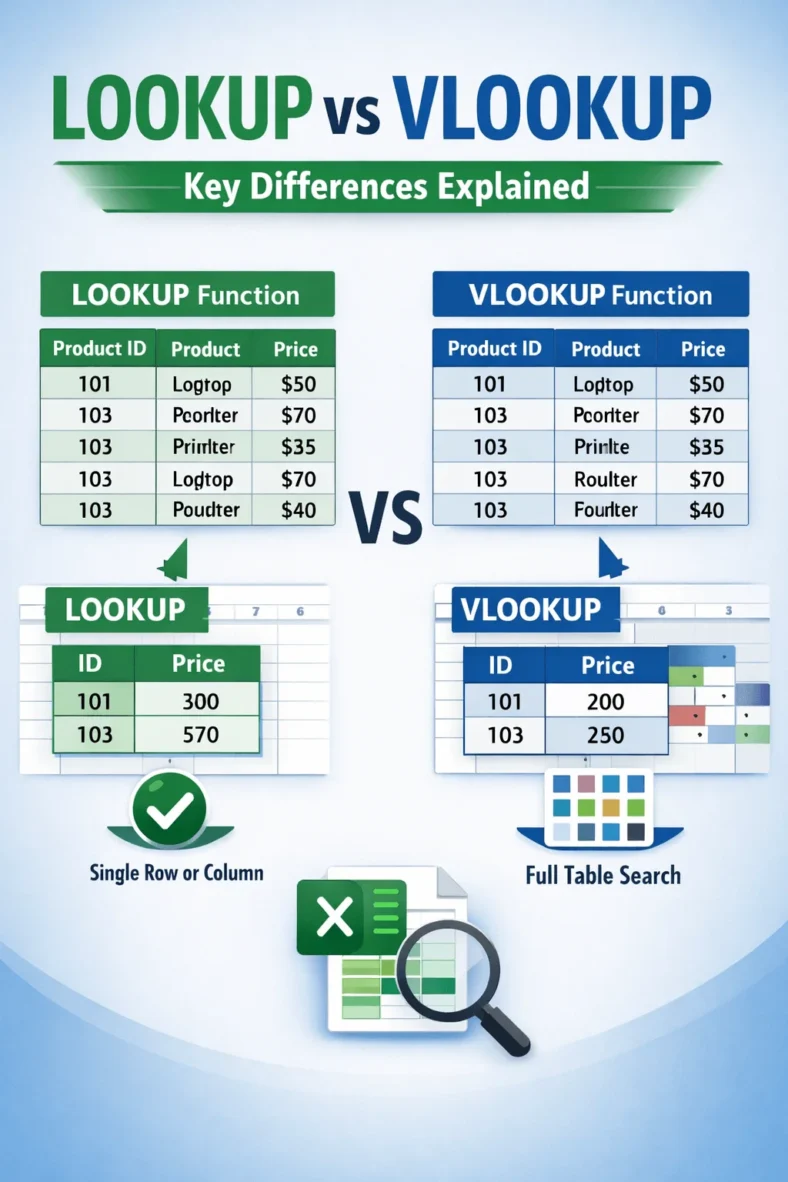
LOOKUP and VLOOKUP are Excel’s built-in functions, used to search for values and return related results. These functions work differently and are suited for different situations. LOOKUP is an older


LOOKUP and VLOOKUP are Excel’s built-in functions, used to search for values and return related results. These functions work differently and are suited for different situations. LOOKUP is an older
Converting text to hyperlinks turns plain text into clickable links that open websites, email clients, or even files directly from Excel. This is useful when managing contact lists, web directories,

When working with schedules, logs, or task durations, you often need to know exactly how many minutes have passed between two times. Excel can calculate this quickly using simple formulas.

When you add time in Excel, the results are usually displayed in the standard 24-hour clock format. This works fine for normal times of day, but it creates problems when

In HR, payroll, and employee records, you often need to calculate employee tenure based on their joining date and today’s date. Tenure tells you how long someone has worked, expressed

A rounded percentage in Excel is simply a percentage value shortened to fewer decimal places, making it easier to read and present. For example, instead of showing 87.4567%, you might

Trailing zeros in Excel are zeros that appear at the end of a number to keep a fixed format. For example, the number 7 can be shown as 7.00, or

In Excel, a custom number format allows you to control how numbers, text, and dates appear in your worksheet without changing their actual values. For example, you might want positive

Mail merge is a powerful feature in Microsoft Word that lets you import data from Excel. However, sometimes the connection between Word and Excel does not work properly. Instead of