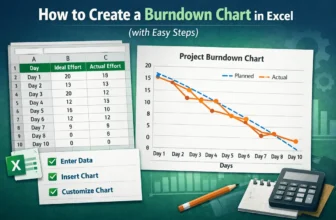
Burndown charts are an excellent tool for tracking project progress, especially in Agile or Scrum environments. They visualize how much work remains versus how much time is left, helping teams stay ...
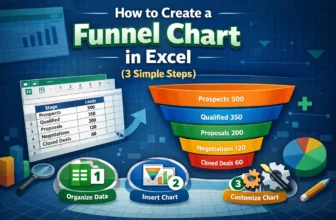
Funnel charts are an effective way to visualize data that flows through stages, such as sales pipelines, lead conversions, or recruitment processes. Each stage is represented as a horizontal bar, and ...
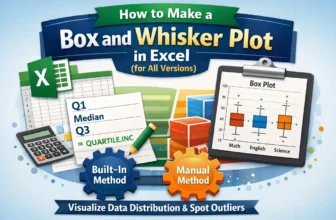
Box and Whisker plots, also called box plots, are excellent tools to visualize the distribution of data. They highlight key statistics like median, quartiles, and outliers, making them perfect for ...
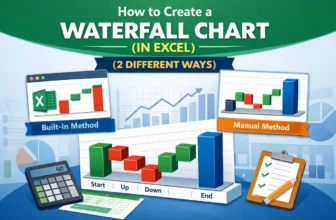
Waterfall charts are an excellent tool for visualizing the step-by-step changes that lead to a final result. Whether you're tracking revenue growth, budgeting expenses, or analyzing inventory flow, a ...
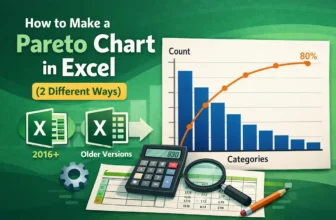
A Pareto chart is an efficient visual tool that highlights the most significant factors in a dataset. It combines a bar graph showing individual values in descending order with a line graph ...
Radar charts, also called spider or web charts, are ideal for comparing multiple variables across different categories. They display data points radiating out from a central axis and connect them to ...
Charts are extremely useful for statistical analysis. In Excel, charts are often used in conjunction with tables to visualize data. In a pivot table, charts become even more useful as they provide a ...
Charts are the visual representation of data. We use charts to quickly identify patterns and trends instead of going through an overwhelming amount of data. You can use the features from the ribbon, ...
Displaying percentages in graphs can help viewers to understand the relative distribution of different categories. You can add these percentages directly using the data label formatting, or by ...